


Choosing a keyword with high search volume is not enough to create content that performs well. You also need to understand why someone is searching for that keyword in the first place.
Two people can search for closely related terms while looking for completely different things.
Here’s an example:
Someone searching “how to choose running shoes” likely wants guidance, while someone searching “best running shoes” is comparing options. A search for “buy running shoes online” signals that the person may already be ready to purchase.
This is where search intent comes in. Search intent is the goal behind a search query i.e. what the person actually wants to find, learn, compare, or do.
Understanding search intent helps you make better keyword decisions and create content that matches what people are looking for. So, instead of chasing traffic just for the sake of it, you can focus on attracting the right people with the right content at the right stage of their journey.
What Is Search Intent?
Search intent is the reason behind a search query. It describes what someone is actually trying to accomplish when they type something into a search engine.
The words in a query can provide clues, but the goal behind those words matters just as much. Consider three searches about running shoes:
- “how to choose running shoes” suggests someone wants advice
- “best running shoes” suggests they are comparing options
- “buy running shoes” suggests they are closer to making a purchase
These searches may relate to the same product, but they represent different needs and different stages of the decision-making process.
Understanding search intent isn’t about guessing what every individual searcher is thinking. Instead, it’s about identifying the most likely goal behind a query and creating content that meets that goal.
When you understand intent, you can choose keywords more strategically and create pages that are useful to the people searching for them.
The 4 Main Types of Search Intent
Most searches fall into four broad categories: informational, commercial, transactional, or navigational. Understanding these helps you match keywords with appropriate content.
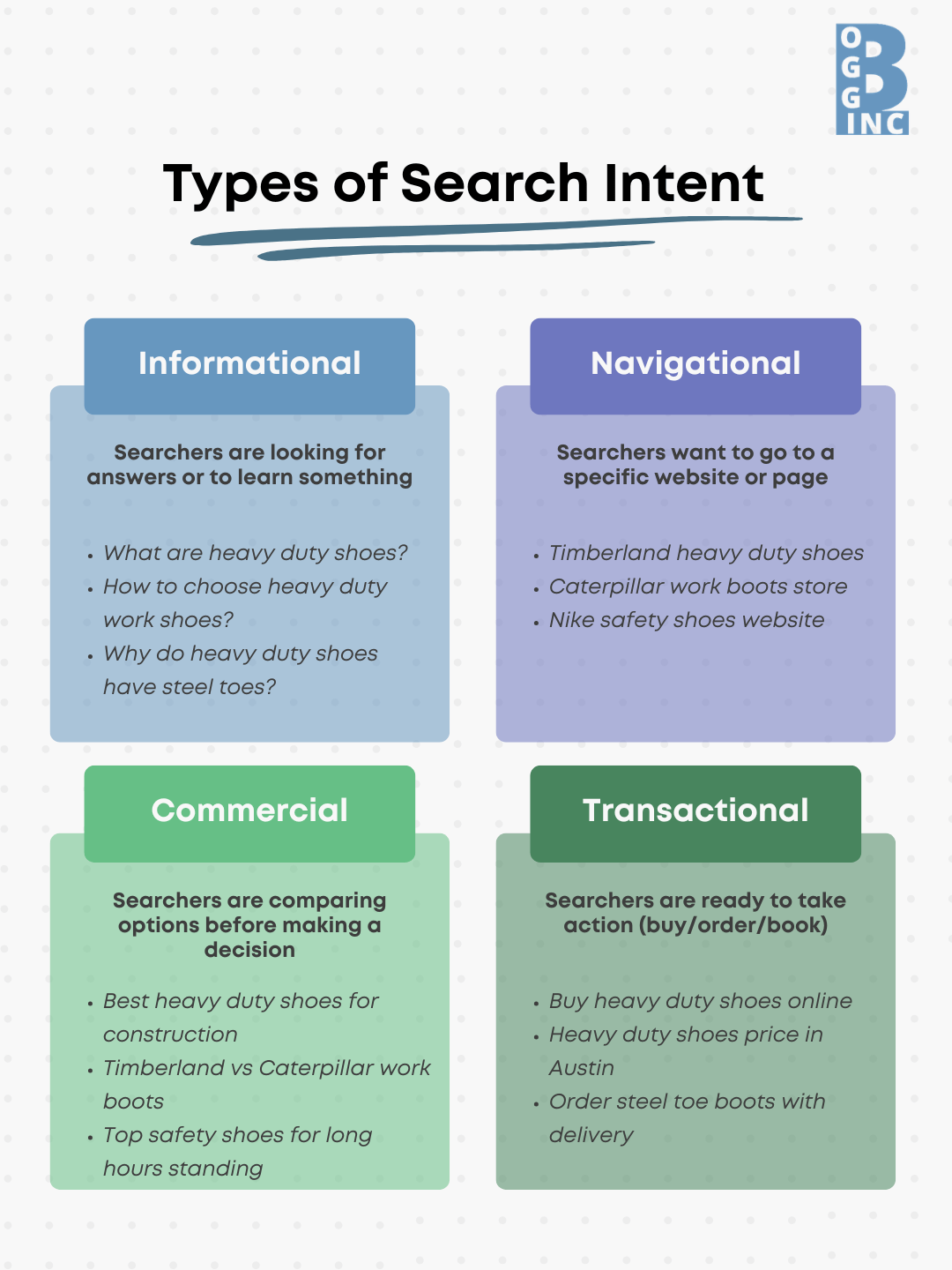
#1. Informational Intent
Informational intent occurs when someone wants to learn something, understand a topic, or solve a problem. They are looking for information rather than trying to make a purchase or complete a specific action.

Examples include searches such as “what is search intent”, “how does WordPress work”, or “how to improve website speed”. Each search query shows that the person wants an answer, explanation, or practical guidance.
Content targeting informational intent should focus on helping the searcher accomplish that goal. Common formats include:
- Guides
- Tutorials
- How-to articles
- Educational videos
- Checklists
For businesses, informational searches can introduce potential customers to problems or topics related to their products or services. By providing useful answers without forcing a sales message, businesses can build awareness, demonstrate expertise, and establish trust that may influence future decisions.
This approach also aligns with Google’s emphasis on helpful, people-first content and E-E-A-T (Experience, Expertise, Authoritativeness, and Trustworthiness), helping businesses demonstrate genuine expertise and build topical authority over time.
#2. Commercial Intent
Commercial intent occurs when someone is researching their options before making a decision. They may not be ready to buy yet, but they are actively evaluating products, services, brands, or solutions.

Examples include searches such as “best WordPress SEO plugins”, “Mailchimp alternatives”, or “best laptops for students”. These searches show that the person has moved beyond simply learning about a topic and is now comparing potential options.
Content targeting commercial intent should help people make informed choices. Useful formats include:
- Comparison articles
- Reviews
- “Best” lists
- Alternatives pages
- Buying guides
For businesses, these searches can be especially valuable because the searcher is already considering a solution. The content should provide honest, useful comparisons and make the differences between options clear. If your product or service is relevant, this is an opportunity to explain where it fits without turning the content into a sales pitch.
#3. Transactional Intent
Transactional intent occurs when someone is ready to take a specific action, often making a purchase, signing up, booking a service, or starting a subscription. They have typically moved beyond research and are looking for a way to act on their decision.

Examples include searches such as “buy running shoes online”, “WordPress hosting plans”, or “Canva Pro pricing”. The wording suggests the searcher already has a clear need and is looking for a product, service, price, or next step.
Content targeting transactional intent should make that action easy. Common formats include:
- Product and service pages
- Pricing pages
- Landing pages
- Sign-up pages
- Checkout pages
The main priority is to give visitors the information they need to make a decision, address key concerns/objections/hesitations, and provide a clear path to conversion without unnecessary distractions.
#4. Navigational Intent
Navigational intent occurs when someone is looking for a specific website, brand, product, or page. They usually already know where they want to go and are using a search engine as a shortcut to find it.

Examples include searches such as “WordPress”, “Ahrefs login”, or “Nike running shoes”. In this case, the searcher isn’t looking for a general explanation or comparison. They are trying to reach a particular destination.
For businesses, navigational searches are less about creating new informational content and more about making important pages easy to find. Your homepage, product pages, documentation, login page, or other relevant destinations should clearly match the searches people use to find them.
Strong branding, descriptive page titles, and clear site structure can all help. The goal is simple: when someone searches specifically for your business or product, they should be able to find the right destination quickly.
Why Search Intent Matters for SEO
Search engines want to show users results that best satisfy what they are looking for. That means a page can be well-written, technically optimized, and built around the right keyword, yet still struggle if it doesn’t match the searcher’s intent.
This is often an intent-content mismatch. For example, creating a product page for someone searching for a tutorial may leave them without the information they need. Likewise, publishing a long educational guide for someone ready to purchase can create unnecessary friction when they simply want pricing or product details.
Understanding intent helps you choose keywords more strategically and create content that fits the searcher’s needs. It can also lead to a better user experience because visitors are more likely to find what they expected.
Most importantly, intent helps you attract more relevant traffic. When your content matches what people are actually looking for, you have a stronger foundation for visibility, engagement, and meaningful business outcomes.
How to Identify Search Intent for a Keyword
To identify search intent, start with the query, then examine the search results to understand what users actually expect.
Step #1: Start With the Search Query
Begin by looking closely at the words people use in the search query. Certain words can provide useful clues about what they want.
For example, words such as “what”, “how”, and “why” often point toward informational intent. Terms such as “best”, “vs”, and “alternative” can suggest commercial research, while “buy”, “pricing”, and “login” often indicate transactional or navigational intent.
However, these modifiers are only clues, not definitive answers. A keyword can have more than one possible interpretation, and the same word can appear across different types of searches.
Use the wording of the query as your starting point, then confirm your assumptions by looking at the actual search results.
Step #2: Look at the Current Search Results
Once you’ve examined the query, search for the keyword yourself and study the results Google currently displays. This gives you a practical view of what searchers are likely expecting.
Look for patterns across the results. Are most pages detailed guides, comparison articles, product pages, or something else? Pay attention to titles, formats, topics covered, and the types of businesses or websites ranking.
For example, if most results for a keyword are “best” lists and comparison articles, that suggests searchers want help evaluating their options. If the results are mostly tutorials, an informational approach is more likely to match the intent.
The goal isn’t to copy what’s ranking but to understand the type of content that currently satisfies the query.
Step #3: Look for the Dominant Intent
Some keywords have mixed intent, meaning different searchers may want different things. In these cases, look for the dominant pattern in the results.
If most pages are comparison articles, commercial intent is likely strongest. If tutorials dominate, informational intent is probably the better fit.
Don’t force a keyword into the intent you want it to have. Let the query and search results guide your decision. If your preferred content format doesn’t match what currently ranks, the keyword may not be the right opportunity.
Why Search Volume Alone Isn’t Enough
Search volume is useful when evaluating keywords, but it shouldn’t be the deciding factor. A keyword can attract thousands of searches each month and still be a poor opportunity if the audience, intent, or topic doesn’t align with your business.
For example, a broad informational keyword might receive 10,000 monthly searches, while a more specific commercial keyword receives only 500. The broader term may generate more traffic, but the smaller audience could be much more likely to need your product or service.
A keyword can have high volume but the wrong audience, the wrong intent, or little connection to what you offer. Conversely, lower-volume keywords can attract highly relevant visitors.
Think of search volume as one data point, not a measure of value. Before prioritizing a keyword, consider whether its intent matches your audience, your offering, and the content you can realistically create.
Search Intent Should Shape Your Keyword Strategy
Keyword research shouldn’t stop after finding relevant phrases and checking their search volume. Search intent adds another important layer i.e. what does the searcher actually want, and can your business create something that satisfies that need?
Once you’ve identified intent, group related keywords by what people are trying to accomplish.
- Informational keywords might belong to educational guides.
- Commercial keywords could support comparison or alternative content.
- Transactional keywords may be better suited to product, service, or pricing pages.
This approach helps you map keywords to the right content instead of trying to make every keyword fit the same format. It also makes content planning more deliberate.
Most importantly, it reduces the risk of publishing content simply because a keyword has traffic potential. The goal is to create content that attracts the right audience, satisfies their intent, and supports a meaningful business objective.
Conclusion
Effective SEO isn’t simply about finding keywords with the highest search volume. The more important question is: What does someone searching this term actually want?
Understanding search intent helps you evaluate whether a keyword is worth targeting, choose the right content format, and create pages that genuinely serve the searcher’s needs. It also helps you focus on relevant traffic rather than chasing numbers that may have very little connection to your business.
Before creating content for a keyword, take a few minutes to examine the query and study the current search results. Identify the dominant intent, consider whether it aligns with your audience and offering, and then decide what type of content makes the most sense.
When you consistently match content to intent, keyword research becomes a way to create content that attracts the right people for the right reasons.
Frequently Asked Questions
Search intent is the reason behind a search query i.e. what someone is trying to find, learn, compare, or do. Understanding it helps you create content that matches their needs.
Start by examining the words in the query for clues, then search the keyword and study the current results. Look for patterns in the types and formats of pages ranking.
The four main types are informational, commercial, transactional, and navigational. Each represents a different goal behind a search.
Yes, but it shouldn’t be evaluated alone. A lower-volume keyword with highly relevant intent can be more valuable than a high-volume keyword that attracts the wrong audience.
Yes. Some keywords have mixed intent. In those cases, look for the dominant intent reflected in the current search results and use that to guide your content decision.


Leave A Comment