


Many WordPress plugin and theme businesses underestimate social media because it doesn’t look like an obvious acquisition channel. After all, customers usually discover products through Google searches, marketplace listings, referrals, or recommendations, not by scrolling through social feeds.
It’s easy to assume platforms like X or LinkedIn or Instagram are better suited to influencers, consumer brands, or companies selling to broad audiences.
But that assumption misses how people evaluate software. Agency owners, freelancers, developers, and site builders all spend time discussing WordPress in public. They share recommendations, debate new features, comment on core updates, and learn from one another every day.
Social media isn’t primarily about generating instant sales. Its real value is helping your business stay visible, build trust, and strengthen your marketing system.
8 Reasons Why Social Media Works for WordPress Products
Here are four reasons why social media works surprisingly well for WordPress products:
#1: WordPress Products Are Different from Traditional Software
The WordPress ecosystem is unusually open, which is one reason social media works better here than many founders expect. Conversations that happen behind closed doors in other industries often take place publicly within the WordPress community.
Plugin developers, theme shops, freelancers, agencies, educators, WordCamp speakers, and open-source contributors regularly discuss the challenges they encounter and the tools they recommend.
Whether it’s a new WooCommerce feature, a Gutenberg update, performance optimization, accessibility improvements, AI integrations, or WordPress core changes, these discussions happen daily across social platforms.
This is the environment WordPress product businesses are marketing into. The conversation is already happening. Your job is to become part of the conversation.
That creates an opportunity many product businesses overlook. Your potential customers are already talking about the exact problems your product solves. By participating in those conversations, answering questions, sharing practical insights, or offering helpful resources, you become part of the community rather than simply another company promoting a product.
#2: People Buy from Companies They See Repeatedly
Very few people discover a WordPress product and make a purchase immediately. More often, buying decisions are shaped by a series of small interactions over time. Someone might first find one of your blog posts through Google, later see a helpful tip on X, watch a tutorial on YouTube, read a LinkedIn post, hear your product mentioned on a podcast, or receive a recommendation from a colleague. Individually, none of these moments guarantee a sale but together, they build familiarity and confidence.
This is where social media plays an important supporting role. It creates additional touchpoints that keep your business visible between searches and product launches.
When a prospect eventually needs a plugin or theme like yours, they’re far more likely to remember a company they’ve encountered several times than one they’ve only seen once. Social media doesn’t replace SEO or content marketing but it reinforces both by helping more people repeatedly encounter your expertise and your brand.
#3: Social Media Extends the Life of Your Content
In the previous articles, we discussed building a content library that includes tutorials, comparison pages, documentation, case studies, and SEO-focused articles. Publishing that content is a great first step. Once that’s done, you can use social media to get far more value from the work you’ve already done.
Instead of sharing a new article once and hoping Google gradually discovers it, you can continuously repurpose it into smaller pieces of content.
A single tutorial might become:
- Several LinkedIn posts highlighting key takeaways
- A series of X posts answering common questions
- A simple graphic for Facebook explaining a feature
- An Instagram Reel explaining how your product helps solve a specific problem
Even your documentation can inspire quick tips that help existing and prospective customers.
Your website remains the primary destination, while social media repeatedly introduces your expertise to new audiences and brings existing content back into view long after it was first published.
#4: Google Is Making Social Content More Visible in Search Performance
One recent development makes social media even more relevant for WordPress product businesses. Google has introduced platform properties in Google Search Console, allowing creators and businesses to see how content from supported platforms, including X, YouTube, Instagram, and TikTok, performs in Google Search and Discover.
This means, instead of treating social posts as separate from SEO, you can now measure which search queries lead people to your social content, which posts earn impressions, and how they contribute to overall discovery.

Social content is no longer something you publish and forget. A useful tutorial, feature demonstration, or industry insight shared on social media can become another entry point into your brand. Someone might discover your expertise through a social post in Google Search before visiting your website.
That doesn’t mean social media replaces SEO. Your website, documentation, and blog remain the foundation of your marketing. Instead, this change reinforces the idea that valuable content can help people find your business through multiple channels.
Rather than focusing on likes or follower counts alone, pay attention to whether your social content is increasing search visibility, driving qualified website visits, and expanding awareness of your product.
It’s also worth mentioning that Google’s investment in measuring social content reflects a broader shift: expertise isn’t confined to your website, and neither are the opportunities for potential customers to discover your business.
#5: Social Media Helps Build Trust Before Someone Visits Your Website
Before buying a plugin or theme, many potential customers do a little research beyond your website. They’ll often check your social profiles to get a sense of the company behind the product. They aren’t necessarily looking for thousands of followers but they are looking for signs that your business is active, knowledgeable, and engaged.

They’ll notice whether you’re answering questions, discussing WordPress developments, sharing product improvements, celebrating customer successes, or responding to feedback. These small signals help reduce uncertainty, especially for products that require ongoing updates and support.
This is why consistency matters more than popularity. A modest but active social presence often creates more confidence than an account that only posts during product launches or Black Friday/Cyber Monday.
Every helpful post, thoughtful reply, and useful insight reinforces the impression that your team understands the WordPress ecosystem and is committed to supporting customers over the long term.
#6: It Keeps Your Product Visible Between Releases
Many WordPress product businesses unintentionally go quiet between major releases. Once a new version ships, weeks or even months can pass without a blog post, newsletter, or public update. To existing customers, that silence may simply mean the team is busy. To prospective customers, however, it can make the product appear inactive.

Social media provides an easy way to maintain visibility without constantly announcing major features. Short updates about bug fixes, performance improvements, upcoming releases, customer success stories, or even your thoughts on WordPress news keep your business present in the community. The purpose of these posts is simply to remind people that your product is actively maintained.
Over time, that steady presence builds confidence. Customers are more likely to trust a product they regularly see evolving than one that only reappears when it’s time to launch the next big update.
#7: It Creates Conversations
One of the biggest mistakes WordPress product businesses make on social media is treating it as a noticeboard. Every post is a product update, a new release, or a limited-time discount. While these announcements have their place, they rarely encourage meaningful engagement.
Instead, use social media to start conversations. Share lessons learned while building your product, comment on changes in the WordPress ecosystem, answer common customer questions, or discuss performance experiments and implementation tips. These types of posts invite responses, encourage discussion, and demonstrate your expertise without feeling promotional.
The conversations themselves are often more valuable than the original post. They help you connect with developers, agency owners, and existing customers while showing prospective buyers that your team is approachable and knowledgeable.
#8: Social Media Gives You Market Research for Free
One of the most overlooked benefits of social media is how much you can learn simply by paying attention. Every question, comment, and discussion provides insight into what your audience is thinking and where they’re getting stuck.
You’ll quickly notice recurring support questions, confusing parts of your documentation, common objections before purchase, and feature requests that appear again and again. Just as importantly, you’ll see the language customers naturally use to describe their problems, language that’s often more useful than the terminology you use internally.
These insights improve your social media strategy, strengthen your SEO by revealing new keyword opportunities, help you write clearer landing pages and documentation, shape onboarding content, and even influence your product roadmap.
In that sense, social media becomes an ongoing feedback loop that keeps your marketing and product development closely aligned.
Which Social Media Platforms Make the Most Sense?
You don’t need to be active on every platform. Choose one or two where your audience already spends time and commit to showing up consistently.
X (Twitter)
X remains one of the most active places for conversations within the WordPress ecosystem. Plugin developers, theme companies, agency owners, freelancers, hosting providers, and WordPress contributors regularly discuss core updates, Gutenberg changes, WooCommerce, performance, accessibility, security, and emerging technologies.
By participating in these conversations, you can stay informed while making your expertise visible to the people most likely to use your product.
The key is to contribute rather than promote. Share practical tips, comment on industry news, answer questions, highlight lessons learned during development, or offer your perspective on WordPress trends.
Over time, these contributions build recognition within the community and create opportunities for people to discover your product naturally. For WordPress businesses, X works best as a place to build relationships and credibility.
LinkedIn is particularly valuable if your customers include agencies, freelancers, consultants, or businesses that build and manage WordPress websites for clients. While the conversations are often less technical than on X, they’re usually more focused on business challenges, client work, partnerships, and long-term growth.
This makes LinkedIn an excellent place to share practical insights rather than product announcements. You might write about lessons from supporting customers, common mistakes businesses make when choosing WordPress plugins, trends you’re seeing in WooCommerce or site performance, or behind-the-scenes decisions that shaped a new feature. These posts demonstrate expertise while helping potential customers understand how you think.
Because many decision-makers are active on LinkedIn, consistent participation can also lead to partnership opportunities, podcast invitations, speaking engagements, and referrals that extend well beyond direct product sales.
Facebook and Instagram
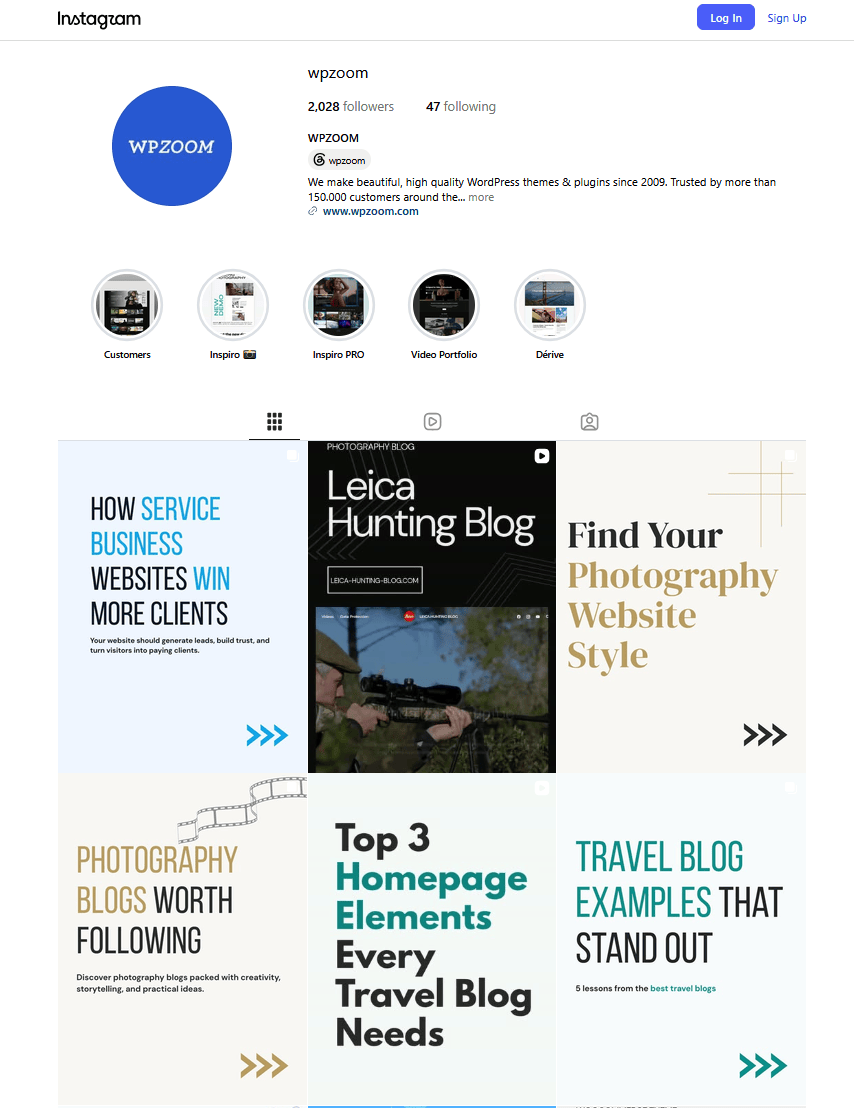
Facebook and Instagram can also be effective, although they serve a different purpose than X or LinkedIn. Rather than focusing on industry conversations, these platforms work well for showcasing your product visually and building an approachable brand.
Short tutorials, setup videos, feature demonstrations, before-and-after examples, customer success stories, and behind-the-scenes content are all easy to consume and share.
Facebook groups remain especially valuable because many WordPress users actively ask for plugin recommendations, troubleshooting advice, and workflow suggestions. Contributing genuinely helpful answers can build credibility far more effectively than posting promotional links.
The same principle applies on Instagram. Use it to educate, not just advertise. Helpful tips, product walkthroughs, and visual explanations keep your brand visible while reinforcing that your team understands the real challenges WordPress users face every day.
A Practical Social Media Workflow for Small Teams
Many WordPress product businesses assume social media requires posting several times a day. In reality, consistency matters far more than volume, especially for small teams with limited time.
A simple weekly workflow is often enough. Publish one useful article or tutorial, then repurpose it into several shorter posts for your chosen platforms. Share a customer success story or an interesting support insight, answer a few community questions, comment on relevant WordPress news, and occasionally resurface evergreen content that newer followers may have missed.
This approach keeps your business visible without constantly creating new material from scratch. More importantly, it ties social media directly to the content marketing system you’ve already built, allowing every article, guide, and customer insight to reach a wider audience while requiring only a small investment of time.
Social Media Is Part of the Marketing System (Not the Whole System)
Throughout this series, we’ve emphasized that sustainable growth doesn’t come from a single marketing tactic. Social media is no exception. Its role isn’t to replace SEO, content marketing, or email but to strengthen each of them. The loop might look something like this:
- SEO helps people discover your business through search.
- Content answers their questions and demonstrates your expertise.
- Social media distributes that content, keeps your brand visible, and creates additional opportunities for people to encounter your business.
- Email nurtures relationships with subscribers.
- Your website converts visitors into customers.
- Your product delivers the experience that earns long-term loyalty.
When these channels work together, each becomes more effective than it would be on its own. More importantly, you’re no longer dependent on a marketplace, a search algorithm, or a single social platform. Instead, you’re building a resilient marketing system that compounds over time.
Conclusion
For many WordPress product businesses, social media feels optional because it rarely produces immediate sales. But that’s the wrong way to evaluate it. Its real value lies in helping people discover your expertise, remember your brand, and trust your business before they’re ready to buy.
You don’t need to chase viral posts or build a massive following to see results. Consistently sharing useful insights and participating where your audience already spends time is often enough to create meaningful momentum.
And, over time, those small, repeated interactions compound into stronger brand recognition, more qualified traffic, and a healthier business.


Leave A Comment